
On-Ground Impact Stories
Follow our daily logistics logs, drilling updates, feeding accomplishments, and inspiring stories of transformation.
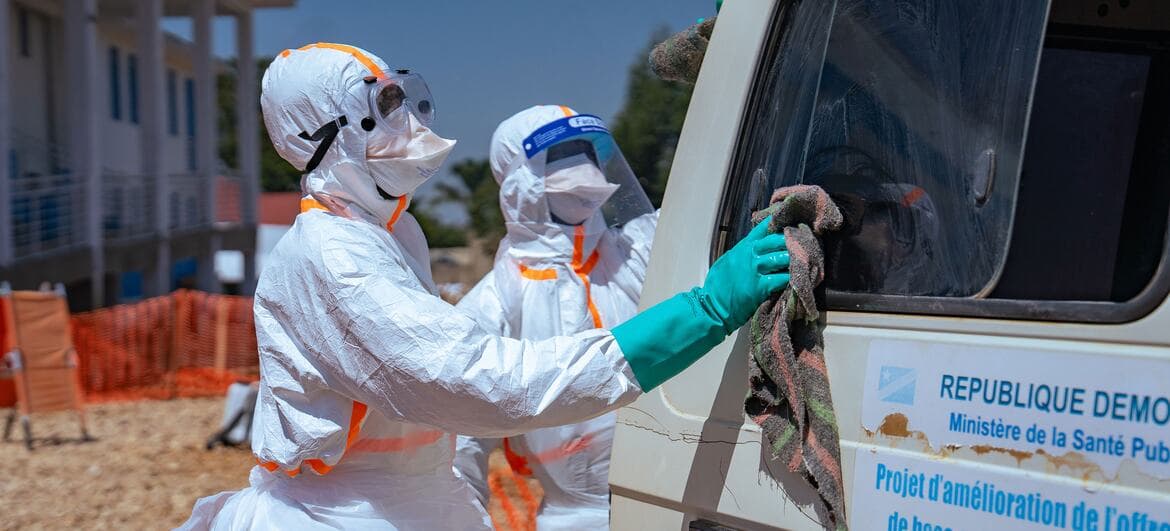
WHO warns DR Congo Ebola outbreak is outpacing response as Uganda reaches milestone
Addressing reporters in Geneva, WHO Director-General Tedros Adhanom Ghebreyesus said the two month-old outbreak has continued to expand despite major efforts by the Government, WHO, the Africa Centres for Disease Control and Prevention (Africa CDC) and other partners.“So far, 2,273 cases have been reported, with 796 deaths,” he said. “By comparison, the 2018–2019 Ebola outbreak in DRC took more than 10 months to reach 2,000 confirmed cases.”Transmission still acceleratingTedros said intense transmission in Ituri province in DRC’s restive eastern region remains WHO's biggest concern.More than 80 per cent of new infections are being detected outside known contact lists, indicating that transmission chains are continuing undetected, while about two-thirds of deaths occur in communities among people who never receive treatment in a health facility.“Despite the progress we have made, the outbreak in DRC is continuing to outpace the response,” he warned.Tweet URLActive armed conflict is also hampering operations. Dr Tedros noted that an Ebola treatment centre in Bunia was attacked on Wednesday, further complicating efforts to reach affected communities.‘This disease can be survived’Treatment capacity has grown to more than 800 beds, laboratory capacity has increased from one laboratory to 16, and contact follow-up rates have risen to almost 80 per cent. More than 21,000 community health workers are being trained, while safe and dignified burials have also improved.The Director-General highlighted encouraging progress in research and therapeutics, but even without approved vaccines or treatments, 377 people have recovered from the disease.“With early diagnosis and safe care, this disease can be survived and stopped,” Tedros said.Uganda milestoneIn neighbouring Uganda, however, WHO reported encouraging progress.The country’s last confirmed Ebola patient was discharged from care on Thursday after testing negative for the virus twice, marking the start of the 42-day countdown before the outbreak can officially be declared over.Uganda has reported 20 confirmed cases and two deaths since declaring its outbreak on 15 May. Fifteen infections were linked to importation from the DRC, while five resulted from local transmission.WHO Representative Dr Kasonde Mwinga said the figures reflected the commitment of Uganda’s health workers, communities and partners, but warned the country remains at risk.Funding gap threatens responseTedros stressed that containing the outbreak will require stronger political backing as well as financial support.WHO's joint continental preparedness and response plan with Africa CDC still faces a funding gap of more than $400 million.“We urge donors to fill this gap and to help us control this outbreak as quickly as possible,” he said.“This is not charity. It's an investment in national security.”The UN Children’s Fund, UNICEF, has also appealed for additional resources, warning this week that only 25 per cent of the funding required for its Ebola response is currently available. During a visit to Ituri, UNICEF Regional Director Gilles Fagninou said the epidemic could still be contained if governments, communities and humanitarian partners acted more quickly and collectively.“We know how to stop this epidemic,” Mr. Fagninou said. “The challenge is not the lack of solutions, but the lack of funding to deploy them at the scale needed.”
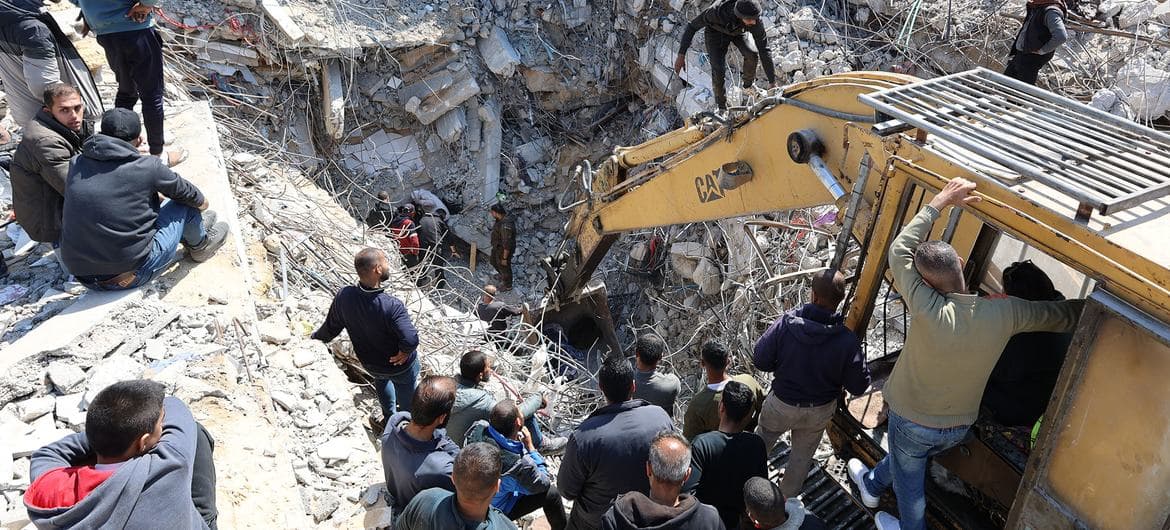
Gaza: Destruction of vital lifting gear halts search for thousands buried under rubble
The destruction of key heavy machinery on Tuesday following reported Israeli airstrikes has brought rescue and recovery efforts to a standstill, making it even harder to reach the estimated 11,000 bodies still trapped under the debris.According to local authorities, the strikes put a halt to all solid waste and debris removal operations, UN Spokesperson Stéphane Dujarric told journalists at a briefing in New York.Until recently, bulldozers and other excavation equipment had been used in painstaking efforts to recover bodies from the wreckage.One bulldozer operated by Atif Nasr – who before the war worked building and repairing roads – had become vital in the grim task of extracting the remains of loved ones from the rubble.He was interviewed by a UN News correspondent in Gaza before the strike but now his grim but vital work has come to a standstill after his vehicle was destroyed.UN News Destroyed heavy equipment, including bulldozers.Months trapped in rubbleThe Dahdouh family managed to recover the remains of their son, Omar, from the ruins of their home, almost a year after he was killed in an airstrike which levelled their seven-story building.Standing at the site, Omar’s brother, Moayad, shared the family’s ordeal.“His body remained trapped under the rubble for nearly a year. After the war, we tried to retrieve him, but with the building so large and with no heavy machinery available, it was impossible.“We searched everywhere for a bulldozer to reach the ground floor – where Omar had been – but during the war, Israeli forces destroyed or burned all the bulldozers or excavators that could have helped us.”A decent burialIn southern Gaza’s Khan Younis, the Dajani family continues to live in what’s left of their destroyed home, where the bodies of three of their children remain buried.Their father Ali remembers the time they died with a heavy heart.“We fled to the beach area during the bombings. When we returned, the house was gone – and our children were still under the debris. We are forced to live here, but this is not life. It is unbearable,” he told our correspondent.“We have no clean water, no food. We are lost. All we ask is to recover our children’s bodies. To bury the dead is sacred. That is all we want.”Just days ago, Mr. Dajani spoke as diggers worked nearby to clear away the debris. That effort, too, has come to a halt for now.
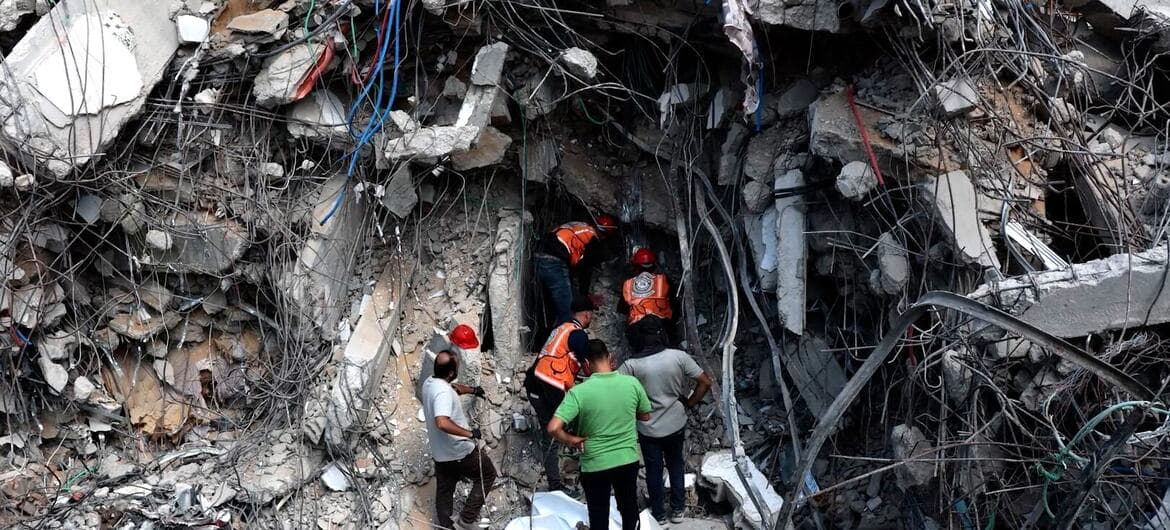
We face a new ordeal’: Gaza's search for the dead goes on
The passage of time and a severe shortage of heavy equipment have made the search and recovery operations increasingly difficult and complex, those working on this mission told UN News.In one of Gaza City’s neighborhoods, a piece of heavy machinery continues to remove the rubble of a war-destroyed house. Meanwhile, civil defence personnel and local teams continue digging and combing through debris for the remains of victims believed to still be buried under the rubble for more than two years.“This building was believed to contain the remains of 44 victims,” said locally based team member Asaad Shreim. “So far, we have only been able to recover 13 of them while the residents and civil defence teams were able to recover the largest number during the first hours following the bombing.”Waiting to find his family’s remainsSearch and recovery operations are still being carried out with limited resources.UN News Ramez Nabhan lost his wife, children and several family members during the Israel-Hamas war.The UN confirms that the removal of millions of tonnes of rubble is hampered by Israeli restrictions on the entry of heavy equipment as well as the risks posed by unexploded ordnance scattered among the rubble, which slows down the process of reaching and recovering the remains of victims.While he watches the excavation work, Ramez Nabhan is waiting to find the remains of his family members who were killed in a bombing that targeted the building where they were staying in the early days of the war.“I was a father of three children, and I had a wife, and I lost them all at the beginning of the war,” Mr. Nabhan said. “Several missiles fell on this building, and the residents and civil defence teams were able to recover some bodies, including my son, my uncle and his wife.”Long delayed burialsMr. Nabhan says that the lack of heavy equipment and fuel during the first months of the war prevented the timely recovery of many victims.“There was no equipment to extract bodies, no fuel or necessary resources were available, and the conditions were not safe for rescue teams to operate,” he said. “We waited a long time and today, we face a new ordeal: recovering the remains and then burying them.”During the search operations, local teams were able to recover a number of his family members, and their remains were placed in designated bags in preparation for identification and completion of burial procedures.UN News The remains of several members of Ramez Nabhan's family, after local teams managed to recover them from beneath the rubble.The wound reopensFor thousands of families in Gaza, the tragedy doesn’t end with the loss of loved ones, but extends to the long wait to recover and bury their remains. With each exhumation, the pain of loss is renewed, and the challenges of identifying the victims become ever more apparent.“It is extremely difficult for the wound to reopen,” Mr. Nabhan said.“We live between the pain of reliving the loss and the funeral rites. These are my children, and there are no words that can describe what I feel inside.”Thousands remain missingAs time passes, identifying remains becomes increasingly complicated due to natural decomposition and the limited capabilities of forensic science and DNA testing, prolonging the suffering of families still waiting to learn the fate of their loved ones.The war resulted in the deaths of more than 71,000 Palestinians and injuries to more than 171,000 others, according to the latest joint damage and needs assessment report issued by the UN and its partners in April 2026.The UN indicates that thousands of people remain missing, and many are believed to still be buried under the rubble of destroyed buildings amid widespread destruction of infrastructure and residential areas throughout Gaza.The search will continue for some time to come.
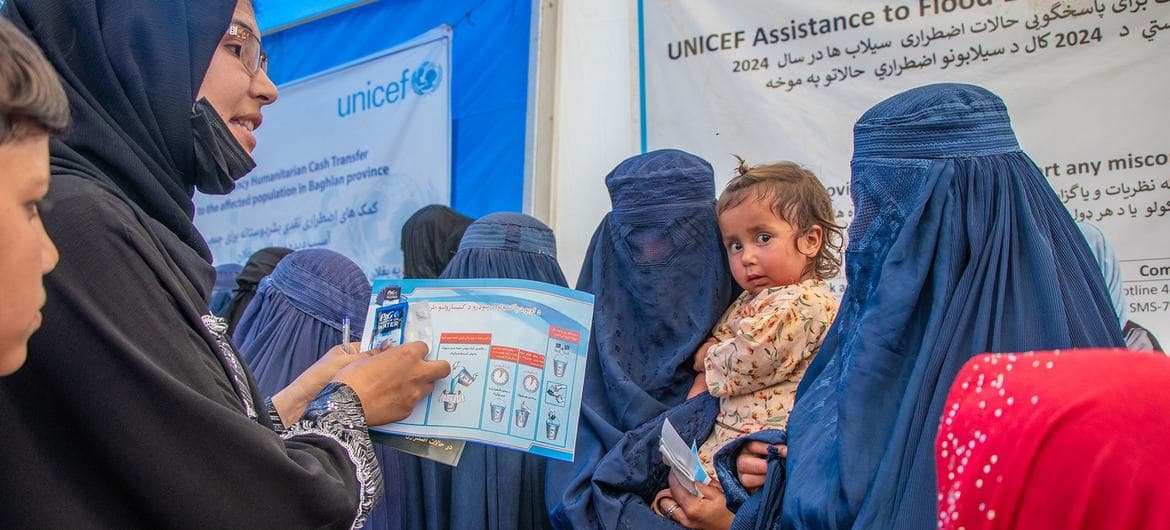
Aid cuts leave at least one million women and girls without vital support
The warning comes in a new report, Beyond the Breaking Point, which finds that those providing essential services to women and girls are being forced to reduce or suspend programmes just as global humanitarian needs reach historic highs. According to the latest figures, around 120 million women and girls worldwide now require humanitarian assistance and protection. Yet the local women's organizations best placed to reach them are facing severe funding shortages, despite often operating in places where international agencies cannot. Tweet URL Struggling to survive Playing a key role in some of the world's most severe humanitarian emergencies, including Afghanistan, the Democratic Republic of the Congo and Haiti, they remain on the ground long after international attention has shifted elsewhere, supporting survivors of violence, displaced families and vulnerable communities. “Every dollar withdrawn from women's organizations is a dollar withdrawn from survivors of conflict-related sexual violence, displaced mothers, girls forced from school, and communities struggling to survive,” said Sofia Calltorp, UN Women Chief of Humanitarian Action. UN Women warned that agencies and partners are being forced to cut programmes at precisely the moment they are needed most. Key findings The report, based on responses from 855 women-led organizations across 52 crisis- and conflict-affected countries, found that: At least one million women and girls have lost access to critical support since January 2025 as a direct result of the steepest annual decline in aid on record. Nearly nine in 10 organizations can no longer meet current levels of need, while 84 per cent report increased demand for their services. Women and girls with the fewest alternatives are being affected first – 63 per cent of organizations have reduced services in remote and hard-to-reach communities. Gender-based violence is increasing. Eighty-six per cent of organizations report rising levels of gender-based violence, while 62 per cent say safe spaces have closed or been significantly reduced. One in five organizations has already suspended work on women's leadership and gender equality as funding cuts deepen a wider global backlash against women's rights. Working without pay Many women leading humanitarian organizations are themselves living through conflict or displacement, yet continue working despite the lack of resources. Nearly two-thirds report staff working without pay to maintain essential services. At the same time, almost half say staff burnout is increasing, while 88 per cent report worsening mental health among the women and girls they support. Services evaporating The impact of the funding crisis is already being felt across crisis-affected communities. Half of the organizations surveyed have introduced waiting lists or are turning women and girls away because they can no longer meet demand. Meanwhile, 92 per cent report growing poverty among the women they serve, and 82 per cent are seeing more girls leave school. Behind the statistics are women arriving at shelters that have closed, pregnant women forced to travel for hours to access healthcare, and mothers unable to secure food for their children. Amina, a midwife displaced from Al Fasher, takes the blood pressure of a pregnant woman at a UNICEF-supported health facility in Tawila, North Darfur, Sudan. The image shows Amina using a sphygmomanometer on a seated woman wearing a leopard print headscarf, with medical supplies on the table. © UNICEF/Mohammed Jamal Amina, a midwife, attends to mothers at a UNICEF-supported health facility in Tawila, North Darfur. Amina who is displaced from Al Fasher, works at the health facility. Beyond the humanitarian response UN Women warns that the consequences extend beyond the immediate humanitarian crisis. The loss of women's organizations also weakens efforts to promote women's leadership and participation in community decision-making. More than half of those surveyed report declining involvement of women in local leadership roles. UN Women is calling for sustained investment in women's organizations, describing them as indispensable first responders, defenders of women's rights and essential partners in recovery and peacebuilding. “Without immediate action, the organizations that have kept women and girls alive through the world's worst crises risk becoming another casualty of war,” Ms. Calltorp concluded.

Realizing the hopes and aspirations of young people – today and for the future
Young people still want families, relationships and a hopeful future — but many feel increasingly unable to realize those aspirations. As the world observes World Population Day on 11 July, a major new United Nations Population Fund (UNFPA) survey spanning 73 countries offers fresh insight into the choices shaping demographic trends. Under the theme “Realizing the hopes and aspirations of young people – today and for the future,” this year’s observance shifts the focus from population numbers to the economic, social and personal conditions that enable young people to build the lives and families they envision. Young people are a vital driving force in all societies, contributing energy, innovation and creativity to national development and to the achievement of the Sustainable Development Goals.